webofevil: (Default)
There's a lot of cheerful parping among the pundits this morning about a “change of direction” for the government after the apparent imminent departure of belligerent oddball Dominic Cummings—Britain's second most risible eugenicist—and about an end to the Tories' culture wars, but don't hang your “Am I Allowed To Say Racism Is Bad Again?” bunting just yet. The announcement yesterday that the government had appointed David Goodhart as an equality and human rights commissioner is simply a continuation of the rightwing project to undermine and corrode any institution that threatens to pursue equality by slowly filling it with people who despise it. Here's an example of why the Tories consider Goodhart qualified for a prominent role protecting people's rights.


The Tories have already calculated that in the wake of the covid/Brexit economic earthquake over the next couple of years there's no way they can appeal to people on a pragmatic basis, so their only option is the sordid culture-war nonsense that sends their constituency associations into a frenzy, raises the political temperature all round and ultimately ensures that people will get hurt, including:

- Immigrants are coming to TAKE YOUR STUFF
- All these gay genders they have now must be stopped because they threaten YOUR RETIREMENT PORTFOLIO
- Acknowledging your country might ever have done anything wrong is both TREASON and PERSONALLY DIRECTED AT YOU
- Those liberal elites with their hot drinks are the ones HOLDING YOUR REGION BACK, even though we're the ones actually in power and refusing to help you

That calculation won't have changed with the departure of one seething weirdo and his less well-known but equally culpable friends. This shit isn't going anywhere. Thank God the UK's Holocaust museum isn't state-run or by now No. 10 would have appointed David Irving and Tommy Robinson to run it and made it compulsory for school groups to attend its new permanent exhibit called "Hey, We're Just Asking Questions".
webofevil: (Default)
Welcome to the Upside-Down of the boring culture war, where golf is basically branded an essential traditional working-class sport (because Tory donors wanted the courses reopened) while being concerned about people travelling on public transport is branded an effete pursuit of the lah-di-dah ivory-tower liberal elite (because Tory donors wanted their workers to get back to work).

Young people who voted Remain—and those too young to have voted but whose sympathies might have lain with Remain—are “spoilt” because they might prefer to travel abroad rather than stay at home this summer, according to an article by a middle-class scion of a family of rightwing journalists who cheerfully says elsewhere that she “loves going to Italy”. Just part of the ongoing manic attempt to divide and rule: pit the north against the south, the M25 against the regions, a suspect “metropolitan elite” against true working patriots (as if the journalists writing this malign nonsense somehow fall into the latter camp rather than the former).


State school teachers and pupils being sent into disease crucibles is presented in a full-spectrum politico-media campaign as “heroism” and “common sense” and unions opposing it are attacked on all sides, especially from Labour, as old-fashioned and obstructionist. Private schools are of course staying shut until September but they are not being attacked (except by parents furious that they keep having to pay the eye-watering fees in absentia, which is actually quite funny). The English always cheerfully accept that the lower orders should be exposed to more risk.

Meanwhile people seem ever more comfortable with the cognitive dissonance required to believe a syllable uttered by their prime minister, the mediocrity whose facility with bon mots and Home-Counties-pleasing racist caricatures turns out to have been inadequate to meet the demands of a national crisis. They calmly accept his contradictions, mainly because Johnson's supporters over the years have told them solemnly “He's not just someone you'd like to go to the pub with, he's a genius and a scholar”, which is an embarrassingly simple trick to fall for, on a par with an adult being amazed and delighted by someone performing “got your nose”.

The words “said Boris” are a pretty straightforward code to break, indicating that whatever has preceded them is an obvious lie (e.g. “There will be no customs border in the Irish Sea, said Boris” translates as “It is childishly obvious that there will be a customs border in the Irish Sea”) but many still find it tough to break. Equally, the fact that Johnson has signed up to something does not mean he won't immediately start railing against it and demanding it be scrapped, which means any contract or treaty he puts his name to is automatically worthless. This week it's the level-playing-field provisions in our EU withdrawal deal, which he is both absolutely furious about and a proud signatory to. There'll be something else next week, and then the week after that, and by and large the English will respond to these grinding U-turns and outright contradictions with the usual “He wasn't sure he wanted to get better from his horrible illness but having a baby changed his mind” and “Do you remember him on 'Have I Got News For You?', I mean I've forgotten everything he said but you really felt you'd like to go to the pub with him”.


Do you clap on Thursday nights for our NHS staff—and cast a suspicious eye at neighbours who don't—but also support the government's decision to charge those NHS staff who aren't native to Britain if they need the exact same NHS treatment that they provide? Do you find yourself agreeing that any opinion along the lines that “people deserve protection” is elitist and fundamentally suspect? Do you believe a single phoneme that is said by or on behalf of Boris Johnson? Then you've been breathing the fumes in the Upside-Down for too long and you're becoming far too comfortable there.

So take a few simple precautions. Don't accept the contradictions; interrogate them. If you're being told something that is the opposite of what you know to be true, assume that this is not an accident and that the person telling it to you also knows that it's wrong. If you are being urged to take the word of a known liar (e.g. most of the Cabinet), resist giving them the benefit of the doubt.

(Of course the trouble with authority being inherently untrustworthy is that it's tempting to believe absolutely none of what it says, which leaves the field wide open for believing any manner of old horsefeathers instead. Please don't let "I need to keep a beady eye on what ministers are telling me because while they're busy protecting their careers and reputations our lives could be at risk" morph into "Covid was developed in a Chinese lab to be spread around the world and activated by 5G masts so that, uh, world government and a sick docile population, or maybe an angry and mobilised population, but anyway definitely chemtrails and faces of lizards in clouds, also GEORGE SOROS and BILL GATES", because come on.)
webofevil: (Default)

Certainly my favourite Greek myth is the one where Hercules tetchily explains that he'd love to be able to help but, as it is, everyone will just have to lump it. And then lots of people die. 


webofevil: (Default)

I've made no secret of the fact that I didn't vote for Boris. 


But I feel strongly that at this time of national crisis we should give credit where it's due. 


So I say we should 100% back our Prime Minister in his unimaginably difficult job of protecting Boris Johnson. 


The People's Government's lamentable failure—or perhaps even zealous refusal—to prepare for this pandemic in the first couple of months of the year, while they were all focused on “sorting out the judges” and finding ways to punish all but the richest immigrants, is going to start showing real results in the next couple of weeks. 


Even his supporters who fell for the “funny bloke in the pub” routine are beginning to notice that healthcare workers on the front line are still dangerously ill-equipped (ironically, something the Tories always used to accuse the Labour government of doing to British troops).


To make matters worse, Boris has been self-isolating for several days. This has been particularly difficult for him, as the opportunities for him to get to know young female researchers and party workers are already limited by the crisis. 


Read more... )

CTRL+Z

Dec. 17th, 2015 03:51 pm
webofevil: (Default)
The government are announcing some tweaks to the Bank of England and Financial Services Bill, notable mainly for repealing (before it had even had a chance to be introduced) a measure designed by the coalition that would have found senior bankers responsible for wrongdoing on their watch even if the regulators had no proof they personally had broken the rules. This might have concentrated minds a bit in the financial sector but, given the modern City’s overreliance on rate-fixing and moneylaundering, it was never going to survive for long under a purely Tory government.

That contentious business is behind us now, though, and we’ve moved on to some mere tidying-up at the end. It’s all pretty dry stuff.

Lord Bridges of Headley: My Lords, the amendments in this group are being made to correct an error made in the National Savings Regulations 2015. Those regulations revoked a number of statutory instruments with effect from 6 April 2015. By mistake, these included the Financial Services and Markets Act 2000 (Consequential Amendments and Repeals) Order 2001, which I will refer to as the 2001 order. The 2001 order, which was revoked, was used to make most of the consequential amendments and repeals that were required to give effect to the Financial Services and Markets Act 2000. It amended a range of primary and secondary legislation, including the Companies Acts, the Bank of England Act 1998, the Building Societies Act 1986, the Pensions Acts and other legislation related to financial services. In some cases, the amendments made by the 2001 order have been superseded by subsequent legislative developments, but in many cases they are still necessary, and the repeal of the instrument making them has left the law in a state of considerable uncertainty.

Wait, what? The department, like every other, had been tasked with binning as much previous footling legislation as possible. In its eagerness to do so, it overlooked the fact that one of the orders it was wiping out actually made some important changes to central legislation, which therefore—technically—immediately snapped back to its original state, where it has remained since April. Myriad legalistic horrors rear up at that point, with people and organisations suddenly and unexpectedly falling foul of regulations that until a moment before had said something quite different.


How do you fix such a spectacular snafu? By making it never have happened:

Lord Bridges of Headley: The only way in which this regrettable uncertainty can be cured is for the revocation of the 2001 order to be cancelled out. That is what the amendments do. Amendment 27 provides that this revocation shall be taken as never having had effect. This amendment would have retrospective effect. We do not believe anyone would be adversely affected by the amendment. On the contrary, the law will be assumed to be as it was in force before the accidental revocation of the 2001 order. This amendment will restore the law to what it is presumed to be.

Just like that, the Treasury are reaching back into the past and erasing their error from history. At no point will this law ever not have applied. At the last minute they have set our dimension back on its correct path as we go about our daily lives, oblivious to the carnage that has been averted and not aware how grateful we should be to our intrepid timecops.

Above all I’m sure that, like mine, your confidence in our political institutions has been reinforced no end by the fact that a set of regulations, which was scrutinised by both Houses, essentially deleted a chunk of existing and implemented primary legislation and not a soul noticed for months.
webofevil: (Default)


The United Kingdom’s role in addressing global challenges posed by terrorism, conflict, climate change and mass migration

Lord Selsdon (Con): My question to us all today is: what can this Government do to follow this up and which countries have historic relationships with their own area? I wanted to look up Scythia in the Library but we could not find out where it was; it was rather difficult. I looked out the histories of all the territories and frontiers. One of my favourite subjects is of course the coastal areas of the world and the sea, which is so productive. I have argued bitterly that we, the British, have the greatest control over the seas because of the 200-mile exclusion zone and, if we got together with the French, we would have 75%.

With which other countries can we help at this point in time to bring about a recovery in those countries that do not have enough to eat, do not have enough food and do not have pure water? We have all the skills within us here. The French have an interesting phrase, which I learnt when working with them in Africa and other territories: it is called grenouiller. I wondered what it was and was told that if you are confronted with an obstacle and you are a grenouille, you have the opportunity to sauter—to jump over it—or to go under it. I assumed that this was the origin of the phrase “frogging about”. But no: grenouiller means that you stir the pot when you are cooking a stew to see what comes to the top.

In a way, we have stirred the pot today. We know that it is not necessarily a defence of the realm issue, but it is an issue where we should be able to encourage those countries that were productive in the past, and were part of colonial empires, to be able to reproduce their food, their livestock and other things. It is not a big problem but I hope that the Minister will tell us all what this Government are going to do to take the lead in bringing about a recovery. Because of our geographic position and others, I believe that we have a greater responsibility than any other nation.
webofevil: (Default)
From Korea by Simon Winchester:


One of the more famous Zen masters in Korea was Hyobong, who was a judge during the Japanese occupation—in fact, the first Korean to be allowed to sit on the Colonial bench. But after having to sentence a man to death, he became suddenly disenchanted with the whole idea of colonial justice, resigned, and became an itinerant toffee seller, during which time he thought deeply about how he could best lead a decent life. He finally decided to become a Buddhist monk and to start proper meditation. He then chose the hwadu “No!” and in 1931­—though it might be difficult to accept this kind of thing happened so recently, so much does it sound the stuff of legend—had himself walled into a tiny hermitage, with only a tiny hole for food to be passed in and out. He stayed there for 18 months, until one day in 1933 he realised that all of his doubts had been resolved. He had himself unwalled, and as a conclusion to his lengthy meditation on the hwadu “No!” wrote the following lines:

At the bottom of the ocean, a deer hatches an egg in a swallow’s nest.
In the heart of a fire, a fish boils tea in a spider’s web.
Who knows what is happening in this house?
White clouds float westward; the moon rises in the east.

After which revelation, Hyobong became a Zen Master, a respected teacher, and was appointed spiritual head of the Chogye order—the principal order in Korea. Thus, while cynics might not accept the validity of the hwadu system nor the sense of the poem that resulted, it has to be accepted that the man who so meditated, and the man who came up with this answer, was appointed to a position equivalent to the head of a major Western church—a church whose rituals must seem as strange to Zen Buddhists as their ways must seem back West.
webofevil: (Default)
From a biography of writer Edgar Wallace, a salutary tale from 1906:


Alfred Harmsworth, later Lord Northcliffe

From time to time it is considered good business for a newspaper to engage in what is euphemistically described as a “crusade”, and in the autumn of 1906 [Daily Mail editor] Alfred Harmsworth decided to undertake a Napoleonic campaign against the rising price of soap. This increase in price had been agreed on by the soap manufacturers, following the sudden rise in the cost of raw materials; it had recently been discovered that some of the ingredients of soap could also be converted into margarine and other foodstuffs suitable for the poor, and to balance the consequent rise in the costs of production the soap manufacturers had put up the price of their products. More, at the suggestion of Mr Lever (later Lord Leverhulme), the Sunlight soap millionaire, they were planning an amalgamation of the principal firms to eliminate the tremendous costs of competitive advertising. Such an amalgamation would, of course, have enormously reduced the advertisement revenue of the newspapers, and rumours immediately spread about that it was part of the scheme to corner all the raw materials available and substantially increase the price of soap to the public. This latter consideration was, according to the statement of his newspapers, the sole inspiration of the philanthropic Harmsworth scheme to fight the “soap trust” and protect the public, and the poor washerwoman who would be most hardly hit by an increase in supervisors became an object of passionate editorial concern.

The attack on the “soap trust” was launched with all the vigour and thoroughness of which Alfred Harmsworth was capable, and most of the Daily Mail reporters, including Edgar, were sooner or later pressed into the fray. A “black list” of all the soap firms involved in the amalgamation scheme was published, with the names of their products, as also a list of firms not so involved, whose products the public was recommended to buy without fear of being instantly strangled by the great soap octopus. Lever Brothers came in for the heaviest punishment, for not only was Mr Lever the originator of the scheme, but he had also, on the advice of his agents, reduced the weight of the standard bar of Sunlight soap by an ounce, a diplomatic alternative to an increase in retail prices. The attention of the retailer had been expressly called to this reduction in weight by a small label gummed on the end of the soap carton, but the Daily Mail fell on the expedient with a yell of outrage which suggested that the “fifteen-ounce pound” was a deliberate attempt to deceive and vampirise the public.


In common with other members of the reporting staff it fell to Edgar to supply colourful detail of the suffering caused to the British public by the increased cost of soap, and he was specifically instructed to voice the laments of the poor struggling washerwoman. Accordingly, with great feeling (and, one cannot help suspecting, from the comfort of his study in Elgin Crescent) he contributed to the general Daily Mail philippics under the moving headline of “Cruel Blow to the Poor”. “Out of the region of high finance,” he wrote, ”away from the battleground where an indefinite public fights a very tangible twelve million pound trust, you are nearer to the crux of the whole question when you get to the place where the washing hangs out on the line and the steam and soapy scent of washing day permeates the neighbourhood… 'From early Monday morning to late on Saturday night'”—it is an unspecified washerwoman who is speaking—“I stand at my wash-tub—and very often well into the early hours of Sunday morning. To meet the competition of the laundries I have reduced my price to 9d. a dozen—and at this price the rise in the price of soap means all the difference between bread-and-butter for my children and dry bread.” This affecting account was inserted anonymously into the columns set aside daily in the Daily Mail for the attack on the soap trust, but it achieved unexpected and somewhat embarrassing prominence when it was quoted in court during the shattering libel action which ultimately followed.

Lever Brothers had borne the assault as long as they could, and then had announced that the amalgamation scheme was to be abandoned. It was an undeniable triumph for the power of the Press, and the Harmsworth newspapers were not slow to drive home to the public the philanthropic magnitude of their achievement. So great was the triumph, indeed, that Harmsworth found himself completely unable to relinquish the subject, and when, a few weeks later, Lever Brothers made an attempt to retrieve the damage by a vast scheme of advertising (not, curiously enough, in the Daily Mail) he returned to the attack with open and exuberant scoffing. This sudden resumption of hostilities was too much for Lever. The Daily Mail campaign had already had a disastrous effect on the sales of Sunlight soap and the value of Lever shares; he had owned himself beaten, abandoned the trust, and restored the sixteen-ounce pound. More he could not do, and when he found himself and his firm still victims of hostile publicity he took legal advice, briefed Sir Edward Carson and F.E. Smith (later Lord Birkenhead) and sued the Daily Mail and associated newspapers for libel.


Edgar Wallace

It was a lively case, and with such brilliant counsel it soon became apparent that the Harmsworth crusade to protect the British public was going to be expensive. With masterly succinctness Sir Edward Carson drew up the case for the prosecution. The Daily Mail, according to the plaintiffs, had accused Levers of selling soap in a fraudulent manner; they also claimed that large numbers of employees had been dismissed as a result of the combine. They had, moreover, charged them with cornering the raw materials market, with attempting to bribe the Press, with using unsavoury fish oil in their products, and with pursuing a policy in regard to the combine which “tended to the oppression of the poor”. Up to the present, said Sir Edward, the trading losses of the plaintiffs had, as a result of these public accusations, already amounted to £40,000, and two million preference shares had been reduced in value with a loss to the shareholders of £200,000.

The charge of oppression of the poor particularly took the ironic fancy of the prosecution, and in the published reports of the proceedings (for the case was being followed by other newspapers with hilarious interest) Edgar's story of the piteous washerwoman occupied a prominent and unenviable place. “Turning,” said The Times report, “to another article entitled 'Cruel Blow to the Poor', Sir Edward said it told a story of a poor widow who supported a large family of small children by washing, and who lost 1s. 6d. a week through the increase in the price of soap. She must, said counsel, have used ninety-six 3d. tablets. (Laughter.) They had asked where this poor widow who was using ninety-six tablets a week and was being driven to the pawn shop by Mr Lever was to be found, and in answer to interrogatories the reply they got was that the story was contributed by a reporter on tne staff who was now in the south of France reporting the wine riots. (Laughter.)”

The defence pleaded in reply that their charges were true, that the conduct of the plaintiffs had been fraudulent and dishonest, and that the articles complained of were fair comment—but the jury thought otherwise. Judgment was given for Lever Brothers, who were awarded £50,000 damages—the largest sum up to that time that had ever been awarded in a libel action. Encouraged by this promising result the lesser soap companies which, with Levers, had borne the brunt of the attack, rushed into litigation, and Mr Lever's damages having set an opulent example, Sir Alfred Harmsworth found himself finally liable for damages amounting in all to a quarter of a million. It was a crushing blow, even to so rich an organisation as the Harmworth Press, and a panic of economy swept through Carmelite House. In the course of the anxious conferences and discussions which followed Sir Alfred asked irritably who was the reporter whose ridiculous calculations on the losses of washerwomen had provoked such malicious amusement at the Daily Mail's expense. Edgar, returning innocently from Narbonne, where he had, indeed, been covering the wine riots, found a black mark of disfavour registered against him.

Margaret Lane, Edgar Wallace: A biography, 1939
webofevil: (Default)


Debate on the Report of the European Union Committee on The EU and Russia: before and beyond the crisis in Ukraine

Full speech here ) Ukraine is a country that I love and respect. If any of your Lordships would like a bit of fun, I would willingly take you down to look at the old missile factory, although it is not producing missiles anymore. The people there are still nice. [Hansard]

Etc. )
webofevil: (Default)
“Who’s going to win the election, then?” It’s a question whose elements float around the building like a nebula, coating everything in it with an unsettling film of uncertainty, but rarely do they gather enough momentum to coalesce into a planetoid that can, say, be bowled at me slightly mischievously by one of our cleaners, a lady in her 50s originally from Mauritius. I run through my usual spiel that basically no-one knows anything at this point, and demoralisation nationally is such that any of the grab-bag of horrors running for office might scrape into power on the pitiful smattering of votes that people will be bothered to cast.

“I think it will be Ukip,” she says. I say that, despite everything I just said, this is still powerfully unlikely. “I shall be voting Ukip,” she says proudly. I look at her, wide-eyed. “But… you know that they don’t like you, right?” I venture. She raises her chin in defiance and pride. “I have been here for 40 years and I have worked for all that time,” she says, “and now I see all these immigrants coming here and getting everything for free.”

We bat back and forth a bit on the veracity of the relentless media reports of hordes of immigrants swarming across the Channel like flying ants to find themselves greeted with cries of joy from self-hating white do-gooders, wrapped in a carpet of money and gifted all the mansions they can eat [1], but she’s immovable. She firmly believes every word they print. “I have always worked for my money,” she says.

“And so do most of them!” I reply, but she’s having none of it. Finally I have no choice but to approach the more delicate aspect of all this. “Okay, but you do know that most Ukip members and voters are really racist?”

“I think that I also am becoming a bit racist,” she confides with a sheepish grin, before launching into an account of the welfare fiddles she reckons her Pakistani neighbours are getting up to. Her own experiences as a black woman emigrating to the UK in the mid-1970s, which are unlikely to have been too rosy, have faded enough that they can be overwritten by the same poisonous far-right narrative that can always be counted on to snare those who have very little: that lot over there are already getting more than you for doing nothing, and if you’re not careful they’ll come and get your stuff too. (Yes, this narrative can be used by the far left too, but in their case they’re talking about the hyper-rich and privileged rather than people who also have very little—and it can’t be quite so easily dismissed as untrue.)


Doomed, I persist. “And you know that they don’t think your children are British? Ukip, and the papers that support them, don’t care if someone is born here and has grown up here—they will always see them as ‘hidden migrants’ and use that to attack them.” Here she sidetracks unexpectedly into a story about having been told officially (by a never identified “them”) that she would be allowed to call her children English but not British, a claim I've never heard before and which sounds a lot like a misunderstanding, but it derails us from confronting the central issue of whether, having voted for them, she would honestly be invited to remain in he adopted country were her chosen party ever to win any kind of majority. Not, I suspect, that she would ever give this scenario any headspace to begin with; she has the monomania, and ability to ignore troublesome and conflicting ideas, of the true believer. She'd still vote for them if Farage himself beeped her nose and daubed a racist slur on her coat.

So when pundits note that the votes of immigrant citizens will play an increasing role in future elections, bear in mind that it isn’t necessarily obvious just who those votes will be cast for. It is at least as likely that someone who has come into a society from outside and had to fight for their place will be minded to pull up the ladder behind them as it is that they might be sympathetic to the plight of anyone following in their wake—especially if there’re encouraged to feel that way by cynical politicians looking to hit the electoral jackpot that is always guaranteed by spreading distrust and fear.


[1] You couldn't make it up.
webofevil: (Default)
Baroness Sherlock (Lab): When this Government brought in the Pensions Act 2011, they introduced an earnings trigger for auto-enrolment… and every year since then we have seen more and more people excluded.

She produces these figures:

2011-12: 600,000 people excluded, 75% of them women.

2012-13: 100,000 people excluded, 82% of them women.

2013-14: 420,000 people excluded, 72% of them women.

2014-15: 170,000 people excluded, 69% of them women.

Total: 1,290,000 people excluded from auto-enrolment in four years, the majority of them women.


The Minister chides her for being so negative.

Lord Bourne of Aberystwyth (Con): I appreciate that the noble Baroness, Lady Sherlock, would want to go on a historical journey rather than review the current good news in the present order, but 20,000 more people being brought within auto-enrolment, 70% of whom are women, is of course good news*.

He doesn’t use the term "Rejoice!", but it's left hanging in the air.


* 1.55%, if you were wondering.
webofevil: (Default)


• The most regal and extravagant papers you can buy
• Feel like a rich and smoky King Midas
• Includes 12 sheets of decadent 24 carat gold papers
• They see me rolling, they hate it

Roll up, roll up! If you enjoy a smoke, deal exclusively in golden bullions and have an imposing bejewelled grill instead of actual teeth, then do we we have the plush puffing paraphernalia for you–Shine 24k Gold Rolling Papers.

One box contains twelve extravagant sheets of slow-burning and perfectly edible 24 carat gold leaf paper. It's dead easy to stick and it burns slowly and evenly. Expensive you say? Perhaps these aren't for you. Only the very purest 24k gold can be used in order for the papers to be edible with no other impurities–they're going in between your cherished chops after all.

You. Could. Be. Smoking. Gold. There is no more extravagant act. So if you've got cash to burn and love rolling in money (sort of) then get yourself these princely papers today. [Firebox]

Firebox's copyrighter is particularly proud of having spotted the potential for wordplay involving the word "rolling", deploying it on three occasions on one page.

Importantly, this product "comes with a certificate to authenticate its golden credentials".
webofevil: (Default)
I was told this recently at a party. It doesn't matter that all this happened within the past five years; it's still straight out of an Evelyn Waugh novel.

“My friend in the Army had to go and visit some Italian troops in Iraq. Different NATO countries had divided up different areas to watch over, and the Italians had been placed in charge of a stretch of road that coalition troops would need to use frequently. After six months, this road was incident-free; no-one had reported being attacked, and the Italians themselves had not encountered a single problem. The British and Americans were stunned, and went to see for themselves just what it was the Italians had been doing right.

“When they arrived at the highway in question, the Italians were nowhere to be seen. Eventually they were found about half a mile away, guarding an empty road that turned out to be a long drive leading to someone’s house. They’d been there by mistake for the entire six months while the busy highway, frequently used by coalition troops, had been entirely unguarded. It was a total fluke that no-one had been attacked.

“Less amusing, because of the subsequent body count, when French troops handed over to the Americans an area that they’d been tasked with guarding, where they, too, had done an impressive job of keeping the peace, they didn’t tell the incoming force that this was because they’d bee paying off anyone in the region who might have given them trouble. Whether the Americans would have acted differently if they’d known this is moot; it became clear that no more payments were being made, and violence skyrocketed.”
webofevil: (Default)
Lord Cameron of Dillington: This long-lasting sore on the face of responsible access to the countryside has got to be firmly gripped, and soon.

webofevil: (Default)
It may not be the headline issue in the recent report of Lord Freud’s unguarded comments at a Tory conference fringe meeting, but there’s something gratifying about seeing a verbatim transcript of the noble Lord’s pronouncements, displaying his characteristic crispness and clarity of thought, suddenly being flung into the public domain like a sack of soiled underwear. Compared with some of his more gnomic babblings this is still pretty straightforward, but it gives a sense of the amount of industrial activity required to make him make sense on the pages of Parliament’s Official Report. For those who missed it:

“You make a really good point about the disabled. Now I had not thought through, and we have not got a system for, you know, kind of going below the minimum wage. But we do have… you know, universal credit is really useful for people with the fluctuating conditions who can do some work—go up and down—because they can earn and get… and get, you know, bolstered through universal credit, and they can move that amount up and down.

“Now, there is a small… there is a group, and I know exactly who you mean, where actually as you say they’re not worth the full wage and actually I’m going to go and think about that particular issue, whether there is something we can do nationally, and without distorting the whole thing, which actually if someone wants to work for £2 an hour, and it’s working can we actually…”
Here either the transcript or his actual sentence just tails off, possibly out of sheer ennui. Unfortunately, the part of that passage that's clearest, that requires the least parsing or interpretation, is the part where he readily agrees with the contention that disabled people are worth less, and this is worth building into policy.

The problem for the noble Lord is that this is what his opponents have contended all along that he thinks and says in private. However much he denies that, the fact that he agreed with such alacrity, safe in the knowledge that he could speak freely as he was among Conservative friends, will from now on trail round after him like a swarm of angry bees. “I care passionately about disabled people,” he says in his apology, a statement—in the light of what’s being done to them with the sweeping away of vital benefits and meaningful support—eerily similar to the dependable claim that “I love women” made by irredeemable misogynists.

His manner is very controlled—he speaks quietly, even when he's winging it and not making any sense, and smiles when he is told stories of the hardships his reforms are causing—but his claim last year not to understand why there was a huge increase in people visiting food banks, coming from a man whose entire career was built on analysis, suggested a deadpan sarcasm at work, a knowing wink to the right-wing gallery.

But what makes this inscrutable man tick? What are his inner thoughts? Oh God, there’s only one thing for it, isn’t there?


2. David Freud, Freud In the City, 2006


You'll laugh, you'll cry, you'll be sick in a bin )
webofevil: (Default)
A clear example of the potential for misunderstanding [in nuclear conflict] comes from Bruce Blair, President of the Center for Defence Information in Washington. Blair was a launch control officer for US Intercontinental Ballistic Missiles. After the Cuban missile crisis, when the US and the USSR came close to nuclear war, the US government introduced a system of physical locks and launch codes that had to be given by the President before any missile could be launched. But as Blair explains: “The locks had been installed but everyone knew the combination. And so the ‘secret unlock code’ during the height of the nuclear crises of the Cold War remained constant at 00000000.” I have always used the same number on the combination lock of my suitcase, because it always seemed too much to bother with. The US Air Force took the same approach to the desire of elected politicians to control the use of nuclear weapons. Thus, for years, US presidents thought things were safer than they really were.

Dan Plesch, The Beauty Queen’s Guide to World Peace
webofevil: (Default)
From yesterday's Times:

A Labour peer now at the centre of a police investigation into claims that he abused 20 boys was reported to have cultivated an extremely close relationship with a teenager over a two-year period starting in 1975.
A series of letters to the boy on parliamentary notepaper, several signed “love from”, show the then MP arranged to meet him repeatedly, including at a Holiday Inn. Police have raided his office at the House of Lords and his home but have not questioned him because he claims to be suffering from dementia. [The Times]
You read that right. A peer is claiming that his dementia debars him from answering questions regarding allegations of abuse, but leaves him sufficiently competent to legislate in the country's second chamber.

Incidentally, the Times appears to be going out of its way not to suggest that this Labour peer having his office in the Lords raided by police over historic child abuse allegations is in any way connected with this one (Daily Mail link, sorry), so I'm not suggesting it either.

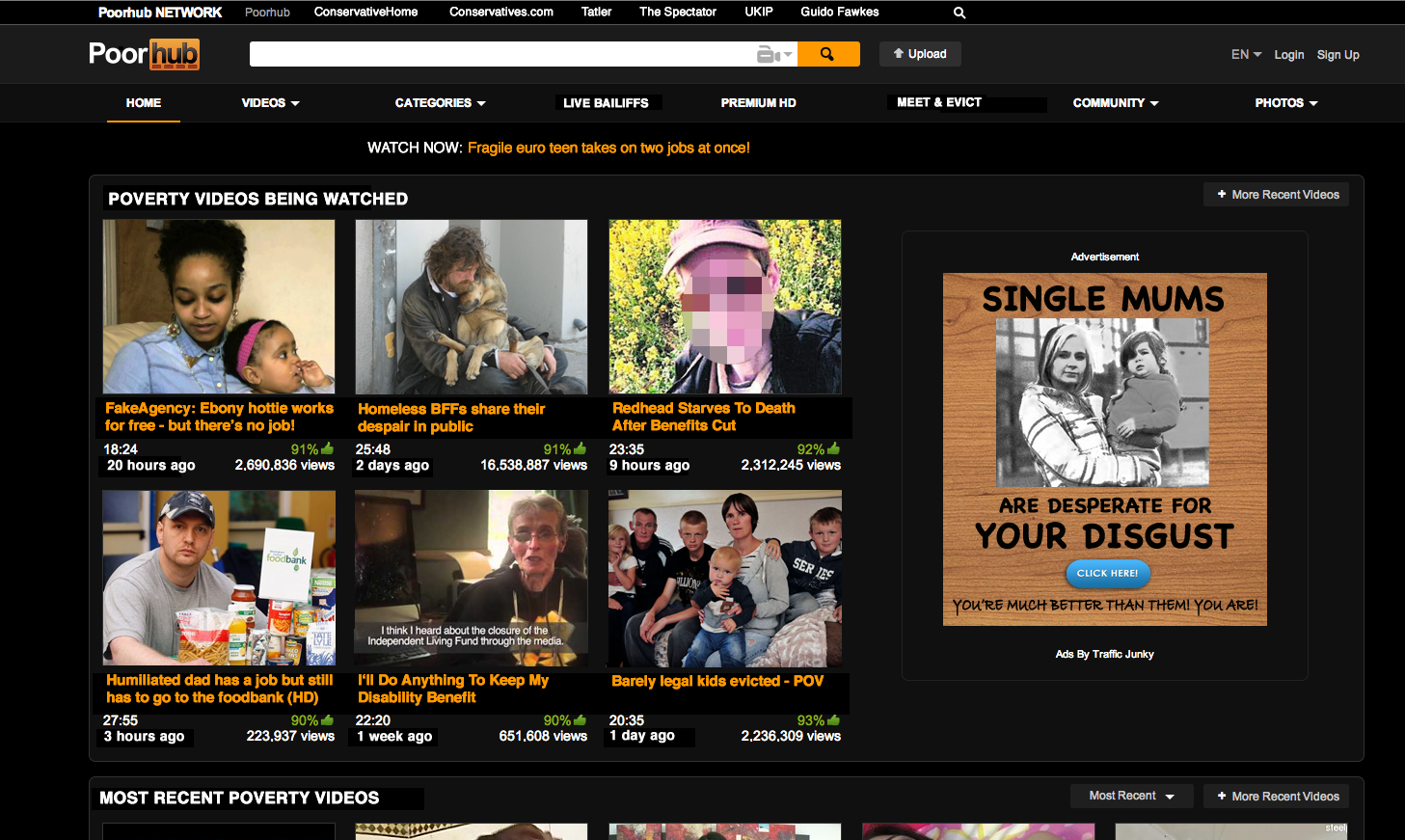
Poorhub

Jul. 14th, 2014 04:17 pm
webofevil: (Default)
It's amazing that the coalition ever gets anything done when there's the internet to peruse:

phub

Click for legibility
webofevil: (Default)
For some, New Labour's muckspreader approach to the word “community” left it limp, ragged and meaningless, a casualty of wanton language abuse. For the old guard, though, it still provides an extremely useful placeholder for any more useful or original thoughts:

Baroness Andrews: In my opinion, it should begin with the nature of the community and the sort of community* infrastructure that sustains the community once it is in place… one is looking at huge opportunities for the planning community to show what it can do. Secondly, it is about delivery and engagement with those very communities that are going to move in, not least with the development community itself, and setting very high standards for the development community in the way that it approaches the making of communities and its engagement with potential communities. [Hansard]

*This one was put out of its misery by Hansard, but she definitely said it.

November 2020

S M T W T F S
1234567
89101112 1314
15161718192021
22232425262728
2930     

Syndicate

RSS Atom

Most Popular Tags

Style Credit

Expand Cut Tags

No cut tags
Page generated Jan. 19th, 2026 03:36 am
Powered by Dreamwidth Studios